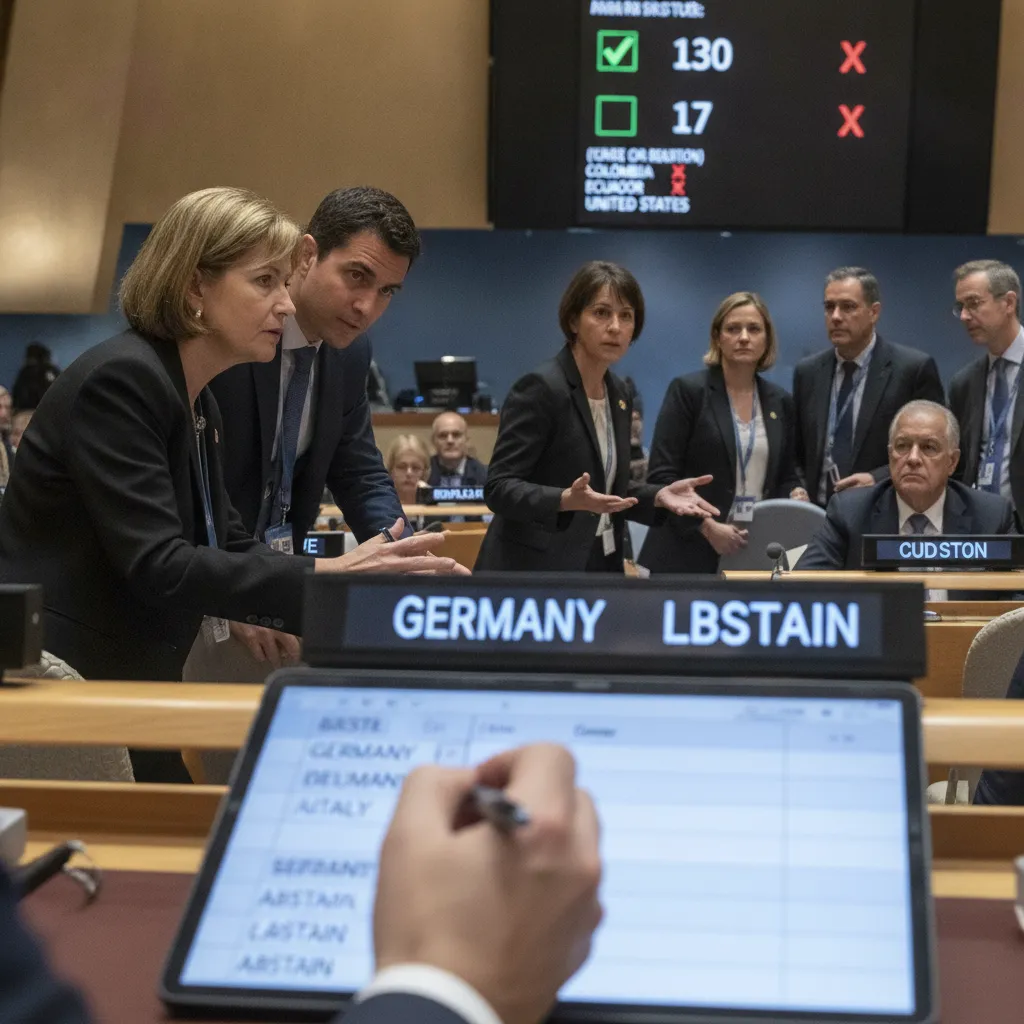
The United Nations General Assembly has once again condemned the United States economic embargo of Cuba, but the latest vote reveals a significant fracture in international solidarity. While the resolution passed 130 to 17, the numbers tell a story of waning support compared to previous years. For the first time in over three decades, several Western nations including Germany, Italy, and Latvia chose to abstain, while others like Colombia and Ecuador voted against the measure. This shift suggests that Washington’s aggressive campaign to isolate Havana is beginning to resonate with a growing number of member states.
The atmosphere surrounding the vote was far from diplomatic, characterized instead by raw hostility and public confrontations. In a scene that broke all traditional UN protocols, U.S. Ambassador Mike Waltz and Cuban Foreign Minister Bruno Rodriguez engaged in a heated shouting match on the assembly floor. The exchange escalated when Rodriguez approached the podium to call Waltz a liar, prompting the ambassador to remind his counterpart that he was dealing with America. The tension extended beyond verbal sparring, with reports of clashes between diplomats that resulted in a Cuban official being sent home under orders from Secretary of State Marco Rubio.
These diplomatic fireworks come at a precarious moment for Cuba, which is currently grappling with severe financial instability and systemic failures. The Trump administration has intensified its pressure on the island, utilizing both economic threats and provocative rhetoric regarding potential military intervention. Recent warnings that the U.S. will impose tariffs on any nation providing oil to Cuba have crippled the island’s energy sector, triggering widespread power outages that have disrupted essential water and communication services for millions of citizens.
While Cuban officials argue that they are victims of an illegal economic war waged by a global superpower, U.S. representatives maintain that these measures are necessary to dismantle what they describe as a corrupt communist regime. As Washington continues to tighten its grip through sanctions and trade restrictions, the shrinking margin of support at the United Nations signals a new and more contentious era in U.S.-Cuba relations, moving away from quiet diplomacy toward open confrontation on the world stage.
This article is for general education only and is not financial, investment or tax advice.