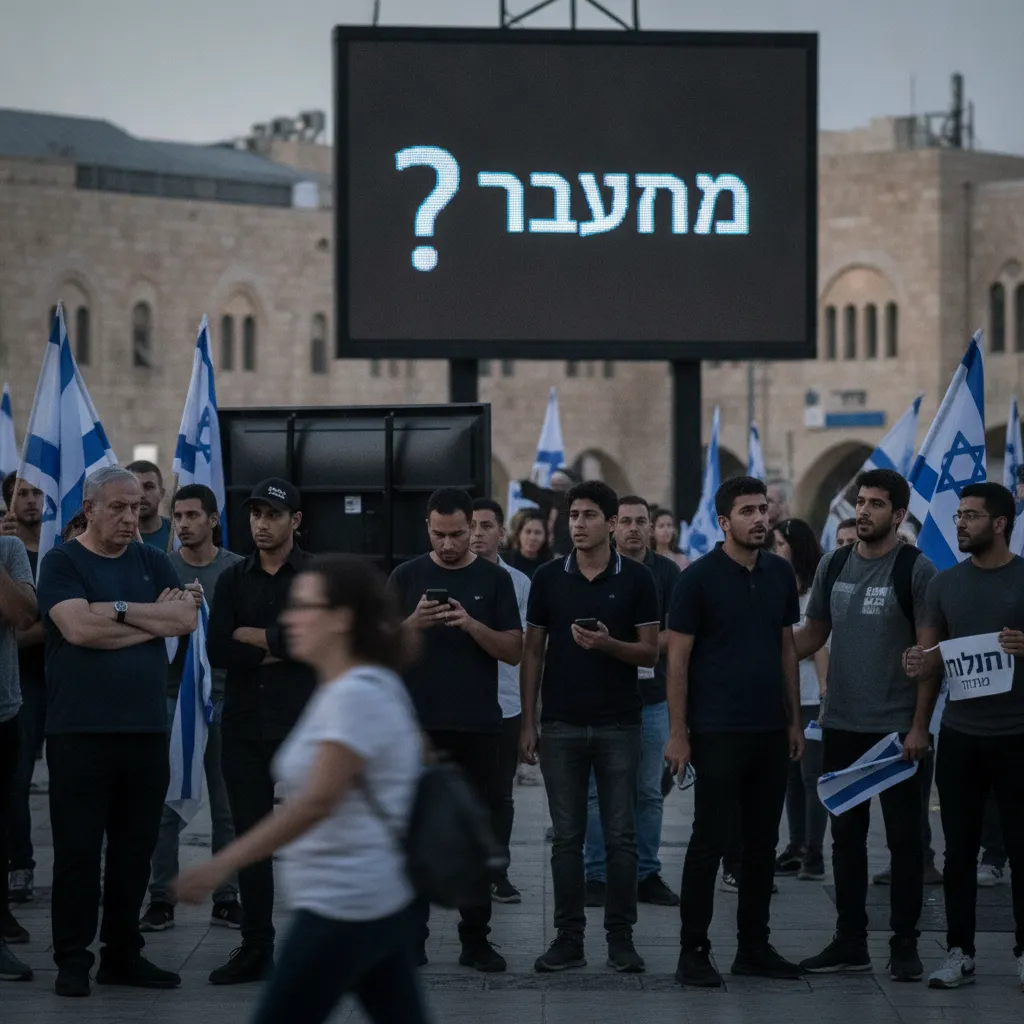
Israel finds itself sliding back into familiar political chaos following Tuesday’s election, with early results suggesting a stalemate that leaves neither major camp with a clear mandate. With eighty five percent of the votes tallied, Prime Minister Benjamin Netanyahu and his primary rival, Gadi Eisenkot, appear locked in a struggle where neither side holds the necessary seats to form a majority government. This gridlock means any successful coalition will likely require someone to betray their core campaign promises, raising the distinct possibility that the country is headed straight toward yet another round of elections.
One potential way out would be a national unity government, though this seems unlikely given the visceral animosity between the two leaders. While Netanyahu could theoretically pivot away from his far right allies to court Eisenkot, he has spent much of the night reaffirming his commitment to his loyal right wing partners. For Eisenkot, joining forces with Netanyahu would mean abandoning a campaign centered entirely on ousted him from power. Observers note that only a sudden external shock, such as an escalation in conflict with Iran, might force these rivals to swallow their pride and govern together for the sake of national security.
Another theoretical path involves an Eisenkot led coalition supported by Arab parties, which would represent a historic shift in Israeli politics. An unprecedented turnout among Arab citizens has left them with potentially nineteen seats, making them kingmakers in this fragmented landscape. However, almost all Jewish parties in Eisenkot’s bloc have ruled out partnering with them, leaving only Yair Golan as a vocal proponent of such an arrangement. Such a government would likely be incredibly fragile and deeply contested over sensitive issues regarding Gaza and the West Bank.
Finally, there remains the option of Netanyahu poaching right wing members from the opposition or simply waiting for new elections. Figures like Naftali Bennett and Avigdor Lieberman share common ground with Netanyahu on security but differ sharply on military conscription for ultra Orthodox citizens, creating a significant barrier to cooperation. If negotiations fail across the board, Israel may return to the polling stations once more. Given terms of caretaking leadership and shifting voter demographics, some analysts argue that another election cycle might actually play into Netanyahu’s hands by wearing down his opponents and consolidating the right wing vote.
This article is for general education only and is not financial, investment or tax advice.